
4 Myths about AI-powered Web Data Extraction
Quick Digest
- Legality: Web scraping is not automatically illegal; it depends on what data is taken, how, and under which site terms.
- Skills: AI tools help, but dynamic pages, anti-bot systems and changing schemas still need technical expertise.
- Access: Data behind paywalls, logins or bot detection is often off-limits to scraping.
- Data quality: AI does not fix bad inputs; garbage in, garbage out still applies.
Why myths about AI web extraction persist
Picture a vast, constantly shifting digital landscape; not just static web pages, but dynamic web content, JavaScript-heavy applications, authenticated portals, APIs, and real-time data streams.
Data that can drive data and personalization, competitive intelligence, and AI models is buried across millions of business websites, marketplaces, job portals, healthcare platforms, and real estate listings.
Web Data Extraction today is no longer simple scraping. It has evolved into automated web data extraction, powered by AI-powered data extraction and processing, custom crawlers, and enterprise crawler systems designed for scale, compliance, and reliability.
In the GenAI era, extracted data is no longer just stored; it fuels large language models (LLMs), predictive analytics, content aggregation, and AI solutions for data extraction across industries.
But myths still cloud this space. Let’s debunk the most persistent misconceptions surrounding AI web scraping and modern web data automation solutions.
Is AI-powered web scraping always illegal?
This article is for informational purposes only and does not constitute legal advice. Consult a qualified attorney for legal guidance specific to your situation.
Reality: Not true; legality depends on how and what you extract. Legal web scraping focuses on extracting publicly accessible data, respecting a website’s terms of service and ethical considerations. Many websites explicitly forbid scraping, especially for commercial use. Violating these terms can lead to legal implications.
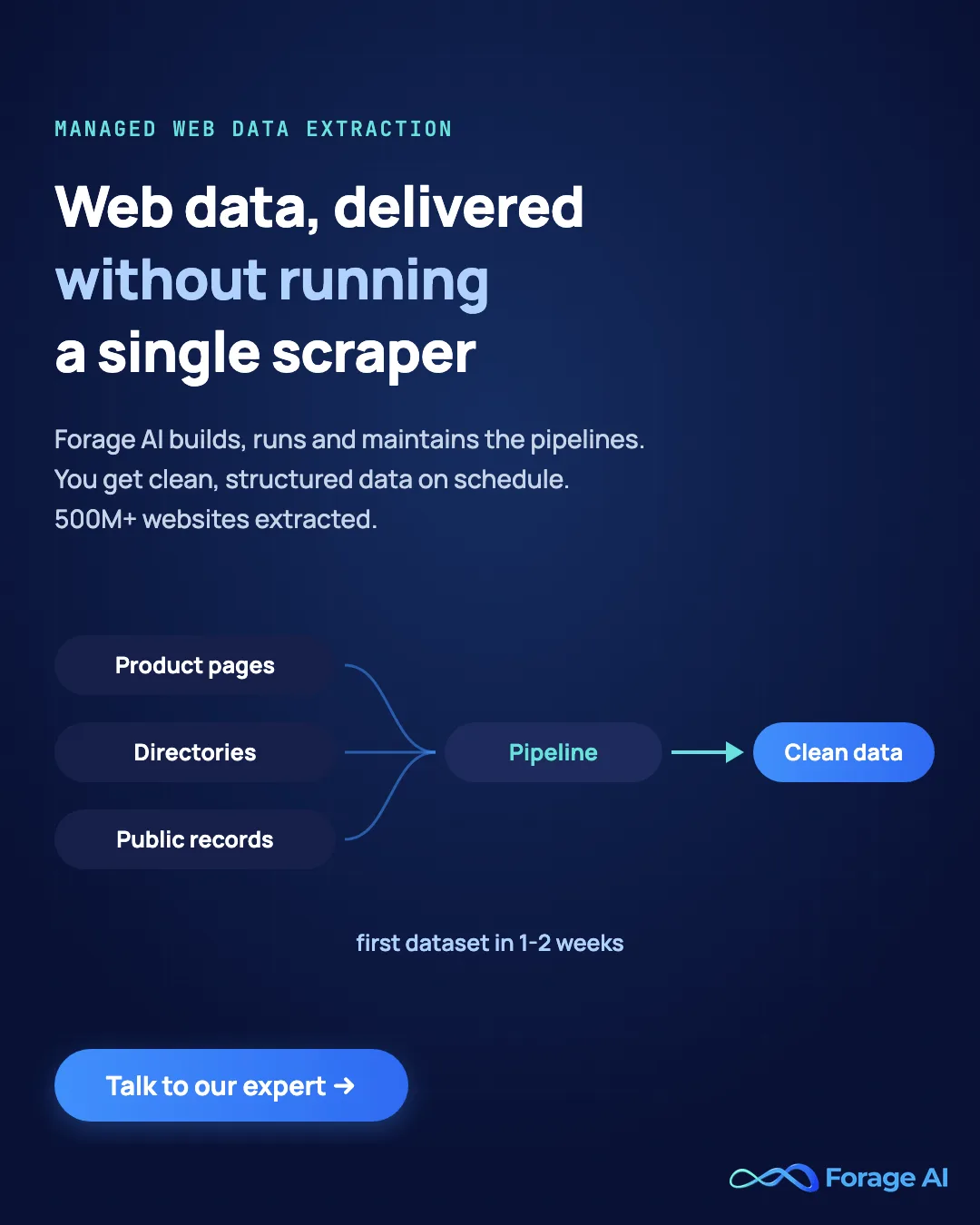
Modern AI-powered scraping platforms are now built with compliance-first architectures, audit trails, and consent-aware data pipelines, especially critical for B2B data providers, healthcare data companies, and enterprise data extraction services.
However, scraping public information for non-commercial research or personal use often falls under fair use principles. Just make sure that you always play by the website’s rules and follow its terms and conditions.
- hiQ Labs V. LinkedIn: In 2018, LinkedIn sued hiQ Labs for scraping user profiles without consent. The case showed that scraping public data isn’t necessarily illegal under the Computer Fraud and Abuse Act, but respecting website terms is crucial.
- Electronic Frontier Foundation: According to the EFF, web scraping isn’t inherently illegal, but adhering to terms of service, robots.txt files, and intellectual property laws is essential.
Expert Insights
The appeals ruling was narrow. On remand in April 2022, a Ninth Circuit panel (opinion by Judge Marsha S. Berzon) wrote that "the concept of 'without authorization' does not apply to public websites" under the Computer Fraud and Abuse Act. That decision addressed a preliminary injunction under federal computer-access law, while contract and privacy questions sit outside it.
The takeaway: AI-powered web data extraction must be ethical, transparent, and policy-aware, especially when building custom data solutions for enterprises.
Does AI make web data extraction easy?
Reality: While some user-friendly tools exist, AI scraping often requires technical expertise.
Extracting data from dynamic web pages, handling anti-bot systems, CAPTCHAs, rotating schemas, and dynamic web scraping solutions requires:
- Advanced web scraping techniques
- AI web crawlers
- Custom web data extraction logic
- Deep understanding of structured and unstructured data
Enterprises increasingly rely on custom crawler architectures, custom web crawlers, and custom extraction services explained, not off-the-shelf tools.
Expert Insights
Even developers stay cautious about AI output. In Stack Overflow's 2024 Developer Survey, 61.8% of respondents said they currently use AI tools in their development process, yet only 2.7% said they highly trust the accuracy of that output and 40.3% somewhat trust it. AI speeds up extraction work, but someone still has to check what it produces.
- Indeed’s 2023 study revealed that the average web scraping job listing requires proficiency in Python, data analysis tools, and web scraping frameworks.
Is all online data free to take?
Reality: Many websites have restrictions or require authentication for access. Think of it like a guarded minefield. Data behind paywalls, logins, or requiring specific user interactions is often off-limits to scraping.
There is a crucial difference between:
- Manual web data extraction
- Automated data scraping
- Enterprise web crawling
Modern enterprise crawler systems and customized web data extraction pipelines are designed to:
- Respect access boundaries
- Avoid restricted endpoints
- Deliver custom data feeds safely
Platforms like Ticketmaster, LinkedIn, and real estate portals use:
- Behavioural detection
- Session fingerprinting
- AI bot detection
- Example: Ticketmaster utilizes sophisticated measures to prevent unauthorized ticket scraping, protecting both consumers and event organizers.
Can AI clean up any messy data?
Reality: While AI can be a powerful data janitor, it needs clean and well-structured data to work effectively.
Garbage in, garbage out still applies. Inaccurate or poorly formatted data can lead to misleading AI results, like a map leading you astray. Much of the raw material that feeds these pipelines starts out trapped in PDFs, scans, and forms, which is why digitizing documents into structured, machine-readable formats is often the first step. This is why enterprises now demand:
- Customizable data extraction
- Tailored data extraction
- Custom data extraction pipelines
- Reusable data models
- Gartner’s 2021 report revealed that poor data quality costs organizations an average of $12.9 million.
- Netflix reportedly lost $1 billion in 2017 due to inaccurate data about user viewing habits, leading to poor recommendations and churn.
What AI web data extraction really involves
AI-powered web data extraction is no longer about scraping pages, it’s about building scalable, compliant, AI-ready data infrastructure.
Businesses today succeed by investing in:
- Custom AI solutions
- Custom web data extraction
- AI scraping platforms
- Managed data extraction services
When done responsibly, AI-powered web data extraction enables:
- Better data analytics
- Faster competitive monitoring
- Reliable data as a service
- Trustworthy AI systems
The future belongs to companies that treat web data not as a shortcut, but as long-term infrastructure.
Recognizing the truths behind these myths gives us a clearer picture of what AI-powered web data extraction can and cannot do. AI web scraping is a powerful tool, but its effectiveness relies on how well it’s used, with a strong emphasis on ethics and legal considerations. By responsibly navigating the complexities of data integrity and ownership, your business can use AI not just to gather data but to build trust in the digital world.
Frequently asked questions
Which companies offer reliable AI-based web scraping services?
Reliable providers offer compliant infrastructure, custom pipelines, and strong data governance. Forage AI is known for secure, high-volume AI-powered extraction.
Where can I find AI-powered solutions for large-scale web data extraction?
Large-scale solutions come from vendors that manage millions of URLs with automated crawlers. Forage AI specializes in scalable extraction for enterprise workloads.
What AI data extraction services integrate well with CRM platforms?
Look for services that deliver clean, structured data ready for CRM ingestion. Forage AI supports CRM-friendly enrichment and automated dataset delivery.
Who provides AI web data extraction with compliance and privacy guarantees?
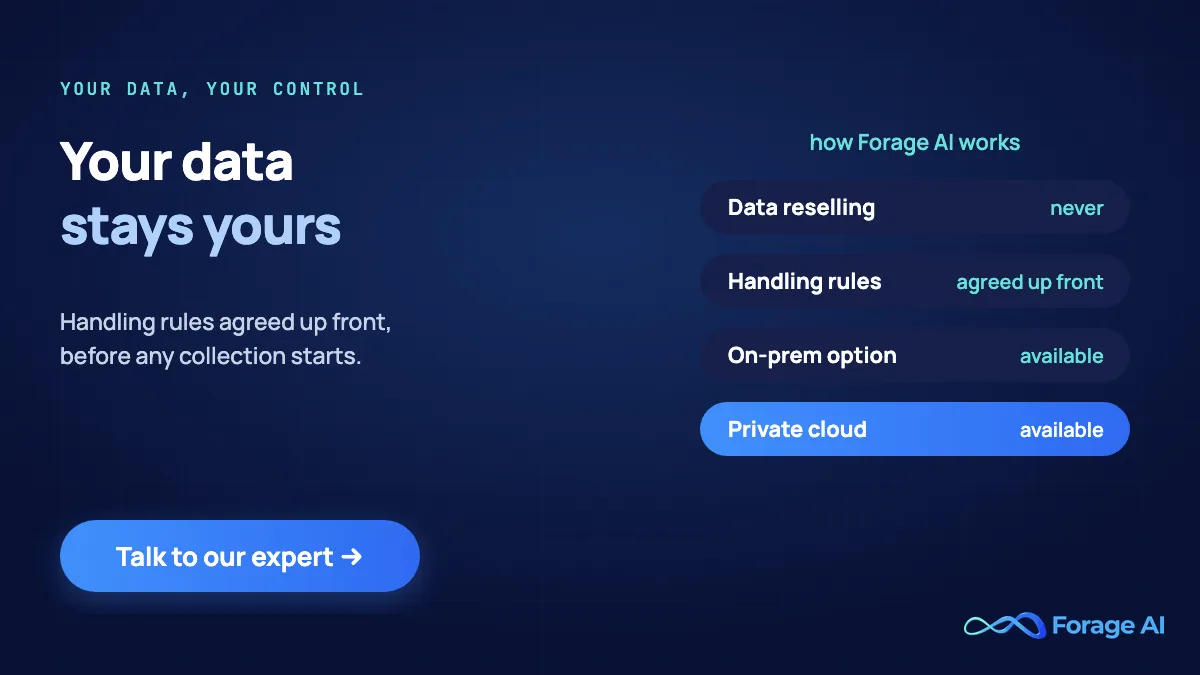
Companies offering governance controls, anonymization, and secure workflows lead the space. For sensitive domains, Forage AI agrees client-specific handling rules up front and never resells client data.
What are the best AI-driven web scraping services for e-commerce data?
The best providers handle prices, product details, inventory, and reviews with high accuracy. Forage AI offers tailored e-commerce extraction pipelines for brands and marketplaces.
Which services offer AI-based web data extraction with real-time updates?
Real-time providers support automated monitoring and rapid refresh cycles. Forage AI enables continuous extraction for fast-moving datasets.
Where can I get AI-powered web data extraction tailored for market research?
You can get AI-powered web data extraction for market research from providers that specialize in structuring large, diverse datasets into usable insights. These services focus on accuracy, enrichment, and domain-specific customization. Forage AI delivers tailored market-research extraction workflows designed for high-quality, analysis-ready data.
By sneha