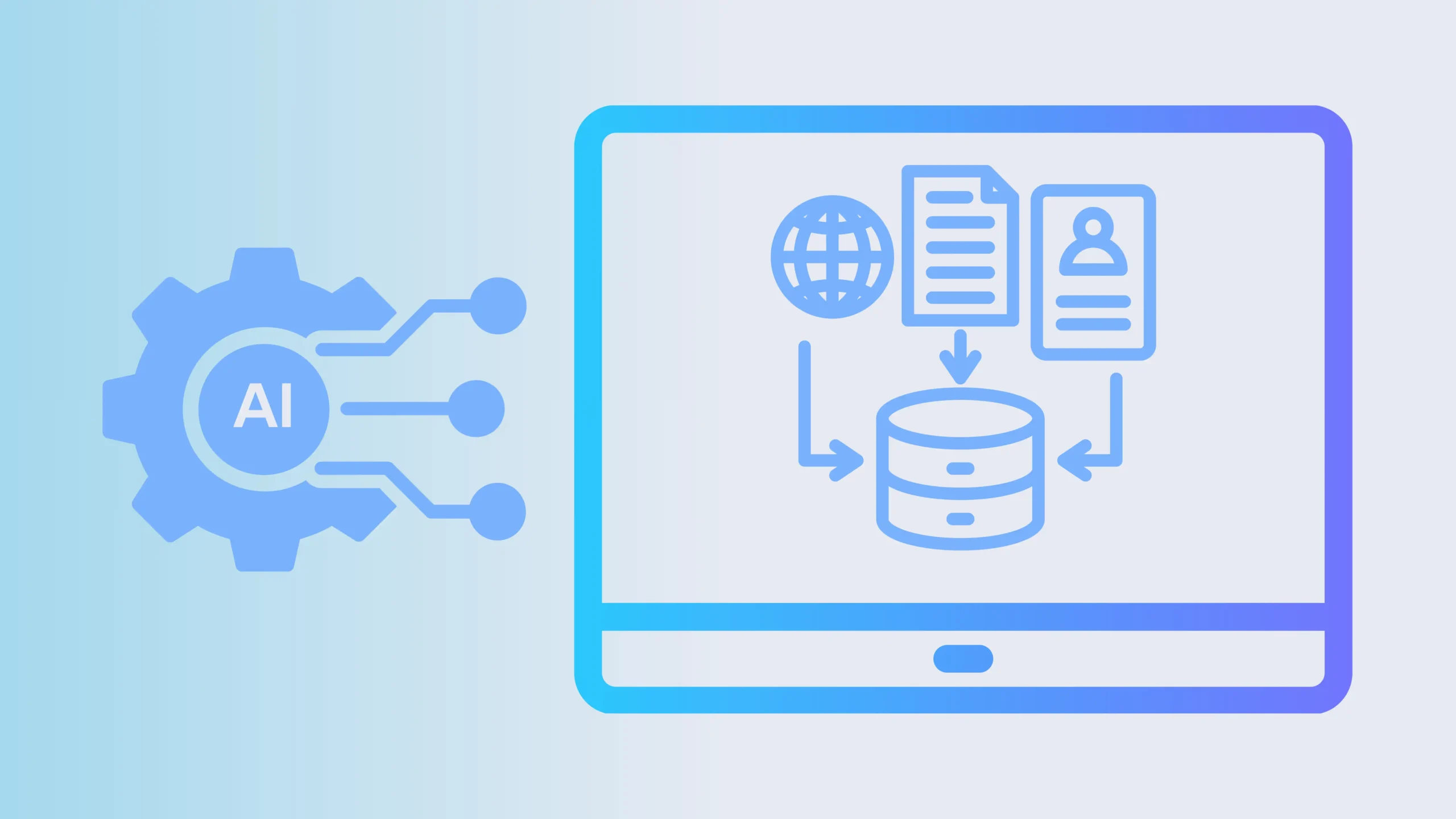
As data surges alongside rapid AI adoption, real-time decision systems, and enterprise-scale automation, access to high-volume, laser-accurate, highly relevant, mission-critical information is no longer optional, it is infrastructure. In this guide, you’ll learn how modern data extraction services in 2026 help enterprises build durable data advantage: from choosing the right strategy and architecture to adopting best practices, evaluating data extraction service providers, and selecting a partner that can deliver enterprise web data feeds with consistency and compliance.
This guide is also written for teams actively comparing the best web data extraction companies 2026, looking up web data extraction companies reviews, running a web data extraction pricing comparison, or deciding between managed web scraping services vs in-house.
What is Modern Data Extraction?
Modern data extraction in 2026 refers to the structured, automated capture of data from diverse sources; web, documents, databases, and multimodal formats, and the transformation of that data into downstream-ready datasets for analytics, AI, and enterprise operations.
Unlike earlier “scripts and scrapers,” 2026 extraction is built around reliability, governance, and delivery. The goal is not just “getting data,” but producing enterprise-grade web scraping solutions that support business intelligence, AI training, and RAG systems with repeatable quality and refresh.
Modern teams increasingly rely on:
- Enterprise data extraction services that deliver governed, production-grade pipelines
- Managed data extraction services and web scraping as a fully managed service for scale and continuity
- Custom automated data extraction workflows when schemas, sources, and business rules are unique
- Enterprise scraping for AI training data and web data extraction companies for AI training as model development accelerates
- Web data extraction for enterprise intelligence across competitive tracking, risk, and market monitoring
Businesses extract target data from a wide range of sources, often combining multiple streams into unified custom data feeds:
- Websites: Critical information is available directly from various online sources.
- Documents: Data from a wide range of document types, including emails, spreadsheets, PDFs, and images.
- Databases: Structured and semi-structured data available in relational and non-relational databases.
- Multimedia: Insights from visual and audio media content.
- Custom: Tailored data is accessed from APIs, local drives, social media, and other unique sources.
- Customer Data: Leverage your own treasure trove of customer interactions and behaviours.
- Data Vendors: Augment your insights with specialized data from trusted providers.
- Manual Data Collection: Complement automated processes with human-gathered intelligence.
In 2026, the differentiator isn’t “how many sources you can scrape.” It’s whether you can convert these inputs into dependable enterprise web data feeds with SLAs, governance, and change resilience.
Evolution of Data Extraction: Traditional to Modern
Technological advancements have driven the evolution of data extraction over the past decade. The market size is expected to grow from USD 2.33 billion in 2023 to USD 5.13 billion by 2030, with a compound annual growth rate (CAGR) of 11.9% (MMR).
Initially, data extraction relied heavily on manual processes, with large teams dedicating countless hours to painstaking data entry and basic extraction tasks. With the wave of globalization, these operations shifted offshore, taking advantage of cost efficiencies while maintaining the human-centric approach to data handling.
Alongside these manual efforts, early automation solutions emerged. However, their capabilities were limited, often requiring significant human oversight and intervention. This hybrid approach, combining manual with nascent automated tools, has characterized the data extraction landscape for years, and it has struggled to keep pace with the growing needs of the industry.
As digital transformation came into full swing, the volume and complexity of data skyrocketed. This growth catalyzed innovations in programming, giving rise to sophisticated computer algorithms for retrieving, modifying, and storing data. Enter the era of ETL (Extract, Transform, Load) processing and advanced data automation:
- Extract: Extracting data from a variety of sources
- Transform: Transforming the data per business rules
- Load: Loading and storing data in the desired format
The flexibility of these automated workflows has created variations like ELT (Extract, Load, Transform) and ELTL (Extract, Load, Transform, Load), each tailored to specific industry needs and use cases.
Despite these advancements, new challenges have emerged in data management and scalability.
As businesses have expanded, the volume, variety, and velocity of extracted data have increased, overwhelming traditional systems. This has demanded more trailblazing approaches to data storage and processing.
To address these challenges, a trifecta of modern data storage solutions has emerged: data lakes, data warehouses, and data lakehouses. Each plays a crucial role in revolutionizing data management, offering unique advantages for different data needs.
- Data lakes: Store vast amounts of raw, unprocessed data in its native format.
- Data warehouses: Offer a structured approach to handling large volumes of data from multiple sources.
- Data lakehouses: Combine the flexibility of data lakes with the performance features of data warehouses.
Complementing these storage solutions, cloud computing further redefined the data management landscape. By offering scalable infrastructure and on-demand resources, cloud platforms empower organizations to handle massive datasets and complex extraction tasks without significant upfront investments or commitments. Cloud-native data solutions leverage distributed computing to deliver unparalleled performance, reliability, and cost-efficiency.
This technological shift enabled organizations to process massive datasets and execute complex extraction tasks without substantial initial capital expenditure. The cloud’s elasticity and pay-as-you-go model democratized access to advanced data processing capabilities, facilitating the development and deployment of sophisticated data extraction technologies across various industries and organization sizes.
Understanding Modern Data Extraction Technologies
Modern data extraction technologies now leverage unprecedented data storage capacities and computing power to implement transformative strategies:
- Automation: Identify repetitive tasks, streamline processes, reduce costs and process vast datasets with minimal manual intervention
- Artificial Intelligence (AI) / Machine Learning (ML): Enhance decision-making, learn from patterns, and uncover hidden insights and continuous performance improvement through exposure to new data. AI/ML goes beyond rules-based logic to handle more complex situations, such as recognizing and maintaining relationships between interconnected data points across multiple data sources, building robust datasets from unstructured data or enabling advanced master data management without the need for explicit pre-defined rules
- Natural Language Processing (NLP): Transform unstructured text data into actionable intelligence, mimicking human language understanding
- Generative AI: Create human-like content, generate innovative solutions that can enhance big data quality, build intuition from currently available sources and checkpoints, provide deeper insights into performance and resolve inconsistencies with precision without human intervention and understand the context to produce relevant outputs across various domains
- Artificial General Intelligence (AGI): While still largely theoretical, AI systems aim to match or exceed human-level intelligence. Development of AGI could revolutionize data extraction by enabling systems to understand and adapt to complex, novel situations without specific programming.
How Modern Data Extraction Changed Business Intelligence
- AI and Natural Language Processing (NLP): NLP techniques extract valuable insights from unstructured text data at scale, enabling sophisticated sentiment analysis, topic modeling, and entity recognition. This capability transforms raw textual data into structured, actionable intelligence.
Read more on: Introduction to News Crawlers: Powering Data Insights - Real-time Web Data Harvesting: Advanced web scraping techniques now enable the extraction of live data from dynamic websites. This provides crucial, up-to-the-minute insights for time-sensitive industries such as finance and e-commerce, facilitating rapid decision-making based on current market conditions.
Read more on: Web Data Extraction: Techniques, Tools, and Applications - Intelligent Document Processing (IDP): AI-driven IDP systems automate the capture, classification, and extraction of data from diverse document types. Unlike traditional logic-based algorithms, these intelligent systems understand the context and build relationships between various data points, significantly enhancing the accuracy and depth of extracted information.
- Generative AI in Data Augmentation: Emerging applications leverage generative models to create synthetic datasets for training models, eliminating the need for extensive labeling operations, augment existing data, provide summarization from vast resources of raw data, and assist in query formulation with human-like prompting, enabling users to “talk” to their data through visualizations, charts, or conversational interfaces. This technology expands the scope and quality of available data, enabling more robust analysis and model training.
- Big Data and Cloud Computing Integration: The synergy between big data technologies and cloud computing enables real-time processing of vast datasets. This integration facilitates advanced analytics and drives the development of increasingly sophisticated extraction algorithms, all while optimizing infrastructure management, costs, processing speed, and data growth.
- Custom Large Language Models (LLMs): Large Language Models, a subset of the AI/ML field, have fueled the evolution of Generative AI by exhibiting cognitive abilities to understand, process, and augment data with near-human intelligence. Building a custom LLM is equivalent to designing your own encyclopedia. Focused on your business needs, these models can help precisely identify areas of improvement, craft data-driven strategies, build resources to empower data use cases and enhance decision-making processes through intelligent automation and predictive analytics.
- Retrieval-Augmented Generation (RAGs): Another breakthrough in enhancing capabilities for LLMs is the RAGs architecture. It blends the abilities of Information RAG Systems and Natural Language Generation to provide relevant and up-to-date insights. Imagine your custom LLMs (or encyclopedia for your business) always serving current data. An advanced responsibility is served by integrating RAGs with your LLMs.
Current Industry Challenges in Data Extraction
The transformative impact of modern data extraction technologies on business is undeniable. Yet, the accelerated evolution of these advanced solutions presents a paradox: as capabilities expand, so too does the complexity of implementation and integration. This complexity creates challenges in three key areas:
Business Challenges
- Cost Management: Balancing investment in advanced extraction tools against potential ROI in a data-driven market.
- Resource Allocation: Addressing the shortage of skilled data engineers and specialists while managing growing extraction needs.
- Infrastructure Readiness: Upgrading systems to handle high-volume, real-time data extraction without disrupting operations.
- Knowledge Gaps: Keeping teams updated on evolving extraction techniques, from web scraping to API integrations to Generative AI.
- Decision-Making Complexity: Choosing between in-house solutions and third-party data extraction services in a crowded market.
Content Challenges
- Unstructured Data: Extracting valuable insights from diverse sources like social media, emails, PDFs, etc. given the complex structure of embedded data that remains often inaccessible.
- Data Freshness: Ensuring extracted data remains relevant in industries that require real-time data to serve their customer needs.
- Ethical and Legal Considerations: Navigating data privacy regulations (GDPR, CCPA) while maintaining robust extraction practices.
- Data Variety and Velocity: Handling the increasing diversity of data formats and the speed of data generation.
Technical Challenges
- Data Quality: Maintaining accuracy and consistency when extracting from multiple and disparate sources.
- Data Volume: Scaling extraction processes to handle terabytes of data without compromising performance or storage.
- Scalability: Developing extraction systems that can grow with business needs and adapt to new data sources.
- Flexibility: Fine-tuning data pipelines to accommodate changing requirements to meet business needs.
- Integration with Existing Systems: Seamlessly incorporating extracted data into legacy systems and business intelligence tools.
Adopting Data Extraction Services in 2026
In 2026, enterprises want plug-and-play outcomes: usable datasets, delivered reliably, with governance and SLAs. That’s why the category has moved toward managed web data extraction service provider models rather than tool-only adoption.
Key pillars of a robust strategy include:
Identifying Your Business Needs
- Assessing What Data is Essential to Your Business Goals: Determine which data directly supports your objectives. This could be business data enrichment, social media data stream, online news aggregation, or automated processing of millions of documents. Knowing what matters most helps focus your extraction efforts on the valuable sources.
- Determining the Frequency, Volume, and Type of Data Required: Consider how often you need data updates, how much data you’re dealing with, and in what format it’s available. This could range from real-time streams to periodic updates or large historical datasets.
Choosing the Right Solution
- Evaluating Vendors and Technologies Based on Your Specific Requirements: Carefully assess potential solutions. The key function to target is their strategic capabilities and partnership strength – this helps in aligning objectives from the outset and setting you up for streamlined operations. Additional areas are technology stack, integration ease, end-to-end data management support, and the ability to handle your critical data types. This ensures the chosen solution fits your business needs and technical capabilities.
- Comparing In-house vs. Outsourced Data Extraction Solutions: Decide whether to manage extraction internally or outsource. In-house offers more control but requires significant resources. Outsourcing provides expert knowledge with less upfront investment. Weigh these options to find the best fit for your needs.
Working with Best Practices
- Compatibility with Existing Workflows: The solution should ensure smooth integration with your current systems. This minimizes disruption and allows teams to use extracted data effectively without major process changes.
- Data Quality and Accuracy: The solution should implement strong validation processes to support data integrity. This ensures your extracted data is accurate, complete, and consistent, enhancing decision-making and building trust in the data across your organization.
- Scalability and Flexibility: The solution should provide scalability to meet your future needs. It should handle increasing data volumes without performance issues and adapt to changing business requirements and new technologies.
- Data Security and Compliance: The solution should prioritize safeguarding your data. It should employ encryption, strict access controls, and regular audits to comply with regulations like GDPR and CCPA. This reduces risk and enhances your reputation as a trusted partner.
- Continuous Improvement: The solution should have room for learning and improvements. It should support regular review and optimization of your processes. This includes monitoring performance, gathering user feedback, and staying informed about new trends to ensure your strategy remains effective and aligned with your goals.
For web pipelines specifically, enterprises should require an enterprise web scraping compliance checklist covering access policy, consent, data minimization, retention, and auditability.
Managed Services vs In-House (What 2026 Buyers Actually Decide)
In 2026, many teams adopt web scraping as a fully managed service because the maintenance burden of in-house scraping is underestimated.
Common reasons enterprises choose managed partners:
- Faster time-to-value
- Reduced engineering maintenance
- Higher reliability under site change
- Stronger compliance posture
- Clear SLAs and data delivery guarantees
This is why search demand has surged for:
- outsourcing web scraping services company
- outsourcing web data extraction company
- managed web scraping services
- managed web scraping for enterprise
- best web data extraction companies 2026
If you’re evaluating the decision properly, include:
- custom web scraping pricing ranges (for bespoke builds)
- managed website scraping service cost comparison (for ongoing operation)
- A realistic comparison of managed web scraping services vs in-house (including staffing + monitoring + break/fix)
Forage AI: Your One-Stop Data Automation Partner
We understand that managing the complexities of data extraction can seem overwhelming. At Forage AI, we specialize in providing robust solutions to these complex challenges. Our comprehensive suite of modern data extraction solutions address all the aspects discussed above and more. We design our full spectrum of services to be relevant to your data needs.
- Multi-Modal Data Extraction: Our robust solutions use advanced techniques for data extraction from the web anddocuments. Coupled with battle-tested, multi-layered QA, you can unlock a treasure trove of insights.
- Change Detection: Our bespoke solutions monitor, extract and report real-time changes, ensuring your data stays fresh and accurate.
- Data Governance: We are GDPR and CCPA compliant, ensuring your data is secure and meets all regulatory standards.
- Automation and NLP: We know exactly when and how to integrate these technologies to enhance your business processes. Our advanced techniques help preprocess and clean data going from noisy raw data to preparing high-value datasets.
- Generative AI Integration: We stay at the forefront of innovation by wisely integrating Generative AI into our solutions, bringing new levels of automation and efficiency. Our approach is measured and responsible—carefully addressing common pitfalls like data bias and ensuring compliance with industry standards. By embracing this technology strategically, we deliver cutting-edge features while maintaining the accuracy, security, and reliability your business depends on.
- Data Delivery Assurance: We provide full coverage with no missing data, and resilient data pipelines with SLAs in place.
- Tailored Approach: We create custom plans relevant to your processes. This allows for tight data management, and flexibility to integrate with existing data systems.
- True Partnership: We launch quickly, work closely with you, and focus on your success.
Final Thoughts
As 2026 accelerates toward AI-native operations, the role of extraction has shifted from “data collection” to “data infrastructure.” The evolution from manual processes to AI-assisted automation isn’t just a technology shift, it’s a strategic shift in how businesses build advantage.
But the value of extraction is still proportional to:
- Quality
- Freshness
- Coverage completeness
- Governance
- Delivery reliability
The best outcomes come from strategic implementation: selecting the right operating model, designing for change, and choosing partners who can reliably deliver enterprise web data feeds at scale.
Take the Next Step
If you’re comparing providers, you’re likely already searching for:
- web data extraction pricing comparison
- web data extraction service provider options
- enterprise web data extraction companies and web data extraction companies reviews
- bespoke web scraping services vs standardized tools
- custom + automated web scraping services and long-term delivery models
Transform your business intelligence capabilities with Forage AI’s tailored data automation solutions. Our expert team stands ready to work with you through the complexities of modern data acquisition and analysis. Schedule a consultation today to explore how Forage AI’s advanced extraction techniques can unlock the full potential of your data assets and position your organization at the forefront of your industry.